Wildlife Census Taking at Nairobi National Park

The Great Zebra & Giraffe Count 2015flyer1

Every year the Kenya Wildlife Service conducts wildlife counts inside Nairobi National Park, the headquarters for the David Sheldrick Trust.  This year it coincided with World Wildlife Day.  The count includes the entire park.  Eunice Robai and I were on hand to represent the Africa Network for Animal Welfare (ANAW) and participated one March 2, 2015.  Our assignment was to drive to the east most loop of the National Park photographing all the Zebra and Giraffe within viewing range.

The count was unique this year because Image Based Ecological Information System, IBEIS (www.IBEIS.org) implemented a pilot project using photography, GPS technology and innovative software to document baseline data identifying migration patterns, individual animals, adjustments due to drought, grazing competition and implications for species moving through protected and unprotected corridors.  The team included Dan Rubenstein of Princeton University, Tanya Berger-Wolf, University of Illinois at Chicago, Chuck Steward, Computer Science at Rensselaer Polytechnic Institute, and Jason Holmberg, of Wild Me (www.wildme.org).

This information is valuable to wildlife managers and has potentially broad application for tacking elephant movement as well.  While we were not tracking elephants we were successful in identifying new animals for the data base.  The systemP1120079 works by loading pictures and GPS coordinates into the IBEIS software and “tagging” individual animals.  The most difficult part of the exercise was finding zebras and giraffes that were standing in a left profile position.  This was one of the criteria for taking the image of any animal.

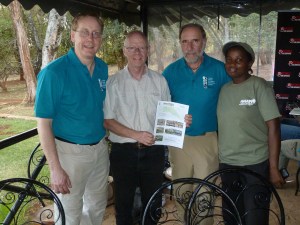
Here is the report identifying any animal new to the database.  Also, pictured her are Chuck Steward, David Gies, Dan Rubenstein, and Eunice Robai.

Colorado’s Petition to Stop the Ilegal Sale of Ivory

Please sign our petition:

If you have been following my posts, you know the efforts taking place around the world to stop the killing of elephants and rhinos.  I live in Colorado and invest a fair amount of time working and being in Kenya.  It seems remote but it is not, to bring the issue of poaching home to Colorado.  The world is such a small place and there is so much human life crowding out and competing for a spot to live on this tiny planet.  One way we can support countries in Africa is to visit them.  This is difficult because security is an issue.   This is changing as the threat of terrorism is an international issue and will diminish.  Indeed, I have don’t hesitate to invite people and friends to Kenya.  But you don’t have to participate in the economic development through travel to support a growing democracy.

The other thing one can do, regardless of where you live, is sign our petition banning the illegal sale and commercialization of animal products in Colorado.  It doesn’t matter where you live.  The petition is about demonstrating that people care and what the slaughter to end.  If you live in Colorado, all the better to sign the petition and add your name to the change we hope to bring about.

It matters to the elephants.  It matters more to our humanity.

BBC News uncovers need for training freight handlers to identify animal trafficing

On February 7, 2015, the BBC News Science & Environment division published a report about the lack of preparedness among freight and shipping handlers for identifying animal parts transported across international boarders.  Among the findings and statements:

  • Poaching of rhinos in South Africa reached a record of 1,215 last year
  • Tigers have been killed off to a level that is 5% of what the population was a century ago.  There are approximately 3,000 tigers left in all the world
  • Smugglers are learning new tricks to disguise horn and ivory
  • Asian ivory carvers are moving into Africa to practice their trade

The article is noteworthy because it is describing the lengths criminals pursue to evade detection.  All this is fueled by consumer demand for animal parts.  Bangles, or bracelets are easily disguised as plastic.  There are few techniques for testing the composition of items declared as something that is not horn or ivory.   Ivory bracelets are labeled  “vintage” or “antique”.  Shipping handlers are stymied and have little recourse but to accept the shipment as is.  How can they question the age of an item?  In practice the burden of proof of age falls to the agent and veracity of the owner shipping the item.

Today, I did a search on eBay and found many bangles for sale that look like ivory.  EBay prohibits the sale of ivory on its site because eBay doesn’t accept the documentation of age from owners.  I wonder if anything slips through and is published for sale?  Perhaps someone reading this blog knows how on-line marketing groups like eBay monitor bangles and ivory-looking objects.  I would be interested in knowing more.  I don’t want to disparage legitimate dealers, but who monitors the claims that ivory is pre-ban and can they prove it?  The volume of pre-ban bangles for sale on the Internet is impressive.  I found one pre-ban bangle priced at $700.

Ivory carvers from China moving to Africa to ply their trade is disturbing.  It puts tradespeople closer to the source of ivory and bone further encouraging demand.  It also suggests the markets in China are expanding.  Edmond and Stiles, in their landmark 2008 publication, Ivory Markets in the U.S.A, identified fewer than 200 ivory carvers in this country (pages 21-23).  In the U.S., carves worked ivory for knife-handles, billiard cues, jewelery, musical instruments, scrimshanders, restored antiques, netsuke and handgun grips.  I’m not aware of an inventory of carvers since this publication which suggests the trades are dying out in the U.S.  The news in the BBC article suggest the trade in carving ivory is far from dead.

This is all the more reason for the bringing attention to the expanding markets worldwide.   We should not be complacent that the poaching of African wildlife is going away.  We might be hopeful the situation is changing.  Fewer elephants were poached in Kenya in 2014 than in 2013.  However, the observations about animal trafficking and general preparedness to identify, arrest and prosecute criminals is not encouraging.

Finally, selling ivory is still a problem for us in the United States.  The purchase of ivory  feeds supply lines and commerce requiring more dead elephants.  A colleague visited San Francisco California last month (January 2015) and took these store front snapshots.  If the American public wants to buy ivory, there still is a lot of it for sale.

Rich Male 150110_1Rich Male 150110_2

Trafficking of animal parts continues, what to do…..

My son shared yesterday’s NPR story about the illegal trade of animal parts, horn, skins. It continues to plague conservation efforts around the world and particularly in Africa. Thanks Brian.

Last year, New Jersey and New York have passed legislation aimed a filling the gaps for trafficking ivory into their states. New Jersey, because of its port cities.  New York passed legislation because of ivory sales and shops along Park Avenue.  Each state recognized the need for expanded oversight and have passed legislation to ban the sale of ivory. California is considering legislation too because of numerous shops in San Francisco and other locations.

Denver Colorado is a sister city to Nairobi Kenya. Nairobi’s airport and Mombasa’s ports are two major exit points out of Africa for the shipment of ivory throughout the world. Ivory is sold in Colorado as well, at sporting exhibitions, shops along South Broadway.

It seems an appropriate action for citizens of Colorado to add our name, the State of Colorado, to the growing list of governments that deplore the killing of elephants and rhinos to extinction. Another feature of poaching for ivory and horn is the profit used by terrorists groups to support their purchase of weapons. Indeed, it was a factor in the arming of Al Shabaab and its massacre of 67 people at the Westgate Mall in September of 2013 in Nairobi.

We can do something.  Add our State’s name in protest to the violence and destruction of animals and humans.  It’s a start.

Continue reading “Trafficking of animal parts continues, what to do…..”

Elephant Poaching Continues

NPR’s story featuring four African Presidents  calls for diplomatic pressure to be brought to bear on China as well as night vision goggles and helicopters.

Poaching elephants continues, even in the face of more publicity and awareness throughout the world.

The Wall Street Journal publishes an Opinion piece by Tony O. Elumelu, a philanthropist in Lagos, Nigeria.  Mr. Elumelu’s comments are about the U.S. Africa Leaders Summit in Washington D.C. that is going on this week.  It is the coincidence that brings together the panel of four African Presidents interviewed by NPR.

Elumelu’s headline is “Africa is Open for Business, Ready for Investment”.  He extolls the ventures of entrepreneurs across the continent and the shift for companies like General Electric, Wal-Mart and IBM to expand efforts for capital investments and ideas impacting Africa’s economy.

Still, Africa experiences internal grabs for power and land, overwhelming population growth, the drought and mass killings of wildlife.  These are factors requiring continued focus by the developed economies of the world if Africa is to grow a middle class.  Hostilities need to be squelched for tourism to return, a significant employment engine throughout Africa but especially the in coastal locations on the Indian Ocean.   And in all this, Africa’s strategic importance to the United States becomes more evident.

Saving wildlife is not a simple task.  It will take support of richer countries to encourage rule of law and the development of governance systems in countries as young as the ones in East Africa.  The world seems more complicated everyday.  Somehow the countries that are rich, through policy as well as philanthropy, must transfer its capitalistic systems with sufficient vigor to build a middle class or the alternative of poverty, chaos and division between the haves and the have-nots is all that will be left.

Serengeti Road Construction ordered unlawful

101_114 - Copy
D.Gies 2009

June 20, 2014, the long-awaited decision by the East African Court of Justice, on the status of building a 53 km road across the Serengeti is finally in.  Judgement-Ref.-No.9-of-2010-Final

The East African Court rules the roadway built to bitumen standard (asphalt on top gravel and sand) across the Serengeti National Park is unlawful and infringes on the Treaty for the Establishment of the East African Community, Articles 1 and 3.

The Africa Network for Animal Welfare (ANAW), with funding from Serengeti Watch and others, successfully argued that building the road would do irreversible harm to this “World Heritage Property” of  “outstanding Universal value” as described by the United Nations Educational, Scientific and Cultural Organization.

This is a big win for environmentalist and the conservation movement in Africa.  The court was careful to balance the decision by adding that it did not want to block the development programs of Partner States to its jurisdictional powers.  Economic development will move forward and it is encouraged in all of East Africa.  This question was one of protecting the environment, the animals, and migration patterns of the hartebeest, wildebeest, zebra and the like, from irreversible harm in the face of human expansion.  Balancing commerce with conservation will always be a difficult battle.

This is a defining moment for saving an important part of the ecosystem in East Africa. Congratulations to ANAW, Serengeti Watch, and all those concerned for keeping a few places in the world majestic and untouched.

Kenya: Employ more rangers solving both an economic and poaching conundrum

Stories about poaching were in the New York Times last week. The Wrong Way to Protect Elephants and In Africa, All Conservation Is Local are both in the op-ed pages discussing this timely issue.  The first article opposes the ban of ivory sales claiming old pianos with ivory keys and treasured ivory-handled pistol grips will be lost forever, hidden away in some upstairs drawer or a piano held hostage in Japan.

The Convention on International Trade in Endangered Species (CITES) “one-off sale”, as it is called, the sale that let countries sell off stockpiles of ivory as a one-time event, stimulated the market. These one-off sales, and there was more than one, sparked an appetite in China and Thailand.   The United States doesn’t barter so much in ivory.  It had, and perhaps still does, have more ivory on display for sale than any other country, but it doesn’t consume more.

In a discussion with Esmond Martin, co-author of the seminal study for the sale of ivory in the U.S., he reports we don’t really know how much is sold in the America.  What we do know is that most of the ivory sold is classified as antique ivory.  Displayed antique ivory represents 70% of the ivory offered in the U.S.  New ivory, or 30% of ivory displayed in the U.S., comes from Asia.

Actual sales data for ivory sold in the U.S. doesn’t exist.   Regulations in the U.S. seem to have curtailed ivory ownership.  Still, if 30 percent of ivory on display is or used to be new ivory there is room to keep the pressure on.  As for rhinoceros horn, Americans don’t use it.  Men of North America use  pharmaceutical alternatives instead.

I continue to promote the ban of ivory, using existing regulations and adding to regulations where it makes sense. I know of several states considering the introduction of new laws to supplement the federal directive banning the sale of ivory.

As for the “All Conservation is Local,” if Africa really wants to halt the killing, it should spend more of its tax revenue on youth employment. Thirty-nine percent of Kenya’s 40 million population are under the age of 30. Unemployment is at a staggering 40 percent. Petty thievery would go down if the unemployed were not so desperate.

Solving the animal crisis in Kenya is really about solving the human condition. The first article’s report on lack of poaching in Nepal, a poor country too, is encouraging. The program compensates farmers suffering losses due to elephants destroying maze crops. It deals with animal conflict and at the same time makes elephants valuable for local protection and tourism. It is a market driven solution.

Philanthropy from interested donors can do more to help the situation.  More encouragement is needed that nurtures new nongovernmental organizations. NGO’s provide a different approach to problem solving and leadership development than governmental employment.  Growing new leadership outside the elites equalizes the distribution of resources while empowering networks to expand into rural communities.   International support by philanthropists should empower NGO’s to:

  • Negotiate with the Kenyan government to spend more funding on young people. Hire and pay people in bush communities to patrol, ranger and scout against poachers.
  • Include a broad spectrum of employment opportunity across all age groups
  • Continue limitations on corruption by organizing local groups through the charitable sector
  • Disrupt the traditional flow of funds by engaging interested philanthropists to partner with unrepresented groups
  • Link the evaluation back to increased security, GDP and tourism

Let me say a little about these solutions. Kenya’s government is very busy with many issues.  The new government is working to curb crime, stop terrorism, build schools, hospitals, infrastructure and the like. The country is only 50 years old and comes from the mixed experiences of colonialism and tribal tradition.  The country is making huge strides in moving 40 million people into the 21st Century.

The West would do well to pay more attention to East Africa. The influence of the Chinese is everywhere as they build the roads throughout the land. These road construction projects are government-to-government contracts. Usually the Kenyan government borrows money from China with China negotiating contracts to construct roads.  They are good roads. Unfortunately these good roads don’t encourage free markets, economic multiplier effect, capitalism or an ideology for holding private property.

What I am proposing is adding a capacity for youth, stimulated by a massive employment program aimed at reducing hostilities toward people and animals. An example is the newly established Kenyans United Against Poaching (KUAPO).  The African tradition of coming together to mediate structures larger than themselves exists. KUAPO represents an organized grassroots network evolving out of the value to simply protect elephants and rhinos. Members represent many communities across the country of Kenya. They meet, they plan strategy, they bring awareness to the poaching issue. They are assertive and thoughtful.

It is good to see so much attention to this topic in the New York Times. It is good that we are taking notice. As one Kenya expressed last week, “poaching of rhinos is bound to get worse before it gets better”. Poaching has not stopped and the prospects for a quick turnaround are not encouraging.  More philanthropic investment is needed at the grassroots level.  Grow Kenyan leadership.  Reform and mediate Kenya Wildlife Service (KWS).  Time is short.

Two Rhinoceros, Two Elephants — Gone

In the last thirty days two rhinoceros have been poached, one within the Nairobi National Park, the largest national park of its kind in the world.  The park shares a border with the city of Nairobi.  Until this event, local wisdom was that the park’s proximity to Nairobi and close monitoring by Kenya Wildlife Service would bode well for wildlife, especially the rhinos.  Apparently not.  Any weakness in wildlife security continues to be exploited by the bad guys.

Yesterday the Standard, one of the major newspapers in Kenya, reported two elephants were killed outside the Maasai Mara Game Reserve this week.  The elephants had wandered out of the sanctuary only a few meters when they were killed and their tusks removed.  Suspects have been detained.

Depending on the magistrate, penalties for poaching are harsh when compared to a year ago.  If the elephant and rhino populations can hold out a little long maybe the poaching will be curbed and elephants will continue to be seen on public land.  With out stronger oversight and deterrent, the awe-inspiring sighting of free roaming elephants is likely lost for ever.  So far KWS and those responsible for the security of wildlife in Kenya have not pronounced any change in the slaughter.  Despite worldwide efforts, high demand for ivory continues.  The battles to save these iconic animals is far from won.

Unfettered Global Capitalism

A recent Washington Times article by a Senior Fellow at the CATO Institute caught my eye this week.  BANDOW: Obama’s ivory-trade regulatory overkill – Washington Times.  

I’m a free-market, private property advocate, but this report about President Obama’s move to ban ivory sales in the U.S. doesn’t dig deep enough into what is really transpiring in Africa.  I am disappointed that the article misses the point about our national security interests.  Having lived in Kenya last year during the Westgate Mall massacre, I can tell you there were several observations about Al Shabab’s involvement in elephant poaching and killing rhinos for quick cash to buy weapons and ammunition.

Another omission was the fact that sports hunters, individual Americans, will be permitted to bring their ivory trophies back to the States.  Each hunter can kill two elephants per year under the proposal and keep the tusks as long as they are not commercialized.  Actually, this is not a change from the previous rules.

And I have to take issue with the claim that it is easy to determine the age of ivory. There are many ways new ivory can treated to look old.   The end-stream-market-price is as high as the price per ounce of gold.  Demand and price motivates counterfeiters.  The flow of merchandise to high-end stores from Manhattan to low-end garage sales and flea markets in Arizona and Colorado continues unabated.  The U.S. is the second largest consumer of ivory.  China is the first.

The last issue I have with the CATO article is how it dismisses the problems another country experiences in controlling animal crime.  It is troubling to see a respected bastion for conservative American ideals and thought demonstrating such lack of civility, or is it humanity.  What right do we have to weigh-in on the topic of killing iconic animals to the brink of extinction when a country like Kenya is demonstrating the will to stop the slaughter?  I can only assume the Institute’s argument rests on the belief that private individuals can, in the pursuit of happiness, kill these animals, 1) because they can afford to do it and, 2) it is a positive function of the free market and invisible hand, that forces of capitalism will generate conservation funds to save the rest of the species.  Regrettably the past 50 years of Kenyan independence doesn’t support this notion.  Kenya embraces democracy and socialism.  In the gap between democracy and socialism there is the ugly head of corruption.  The rules don’t play out the same way under these circumstances.

Let me point out that Kenya does not permit hunting.  Yet, the demand for ivory is so strong, curbing the slaughter of animals in Kenya is very very difficult to accomplish.  Last month, January 2014, a rhinoceros was killed in Nairobi National Park for its horn. Some people were bold enough and knew enough about the landscape to enter the gated and guarded park, find the rhinoceros, kill, butcher and escape. The park shares its boundary with the largest city in East Africa.  How does this happen? Where does it end?

Poaching ends, in part, with symbolic gestures like banning the sale of ivory in the United States, to show solidarity with other countries, that America stands behind efforts to save the species.  The truth be known, if you read the small print, real antique ivory like a world-class collection in Denver, Colorado, is safe from destruction and eligible for sale.  So  to is the right of hunters to bring legally harvested ivory back to this country.

Support the ban.  Stop the criminals.  Find the middle.

 101_112 - Copy

Photo: D.Gies 2010, Tsavo East National Park, Kenya

U.S. Strategy for Combating Wildlife Trafficking

This week the White House released a new get-tough policy on wildlife trafficking. The director of the U.S. Fish and Wildlife Service announced that his agency will use its existing legal authority to stop virtually all commercial trade in elephant ivory and rhino horn with the United States.

This is more than chest-beating. The outcry of citizens in Africa, Europe, the United States and around the world is finally tipping the scale in the right direction.

This is exactly what Daniel Ashe, the director of U.S. Fish and Wildlife, promised last November when six tons of elephant ivory was crushed at the Rocky Mountain Arsenal in Denver. Congratulations to Ashe and his agency for this action.

The U.S. Departments of Justice and State are also joining in the combined effort to detect and prosecute any movement of ivory within the U.S. and across its borders.

Elephant and rhino horn trafficking involve two species of note but hundreds of other endangered and protected species are going to get the same attention.

Ashe’s announcement demonstrates widespread regard for protecting endangered species, especially elephants and rhinos. While the announcement   doesn’t describe in detail the talks that must have taken place with hundreds of conservation groups, it is obvious from the wellspring of support among hunters and animal rights advocates that it is high time for the U.S. to take deliberate action to bring criminals into account.

This is about illegal trade. Legal possession of limited horn and tusk is permitted under CITES (Convention of International Trade in Endangered Species) guidelines. But sports hunters and animal rights advocates stand on mutual ground – at least today – to bring an end to the decimation of the world’s iconic animals and all endangered species.

Bravo.