October 2026 | Clock Restorations
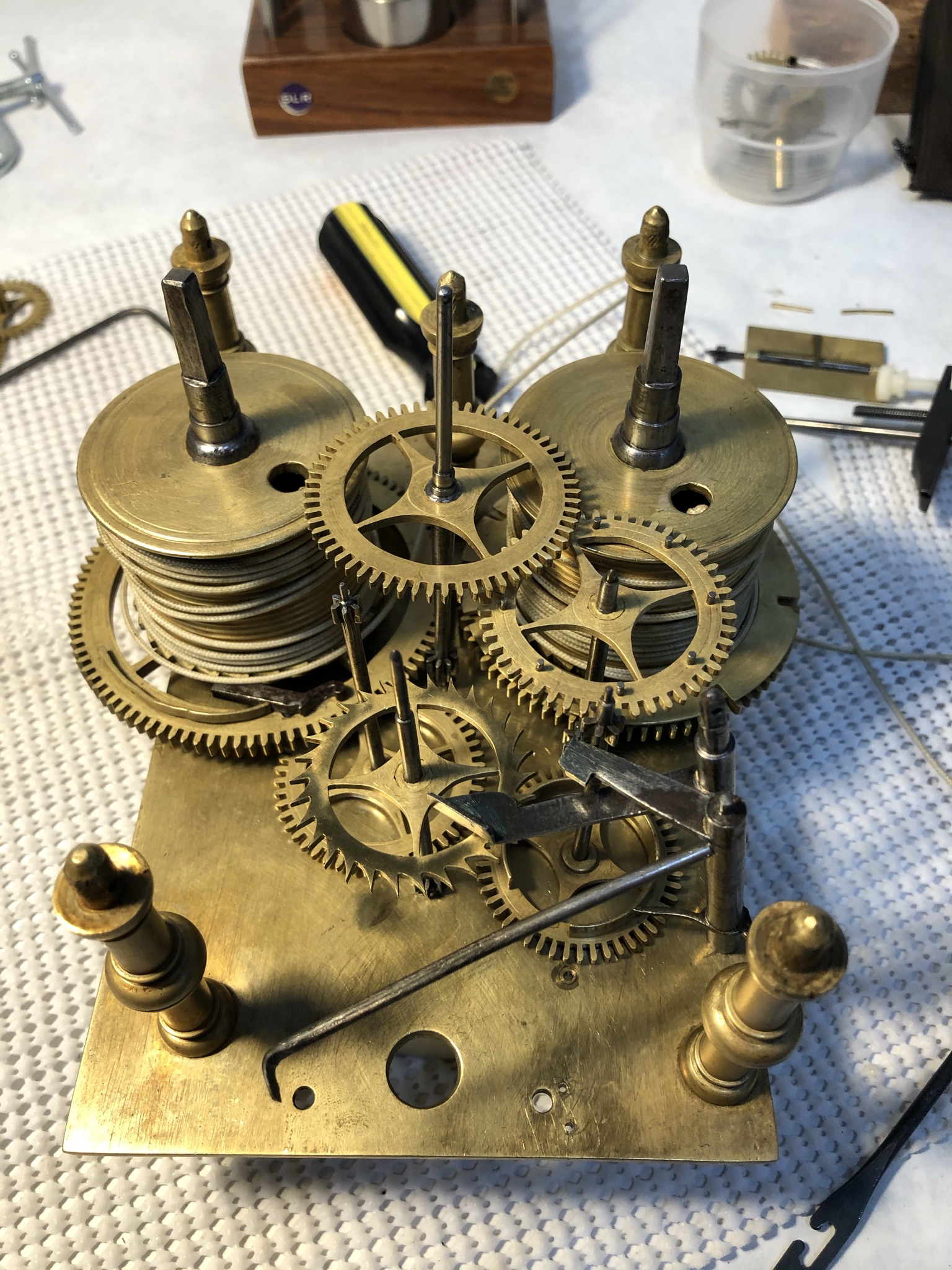
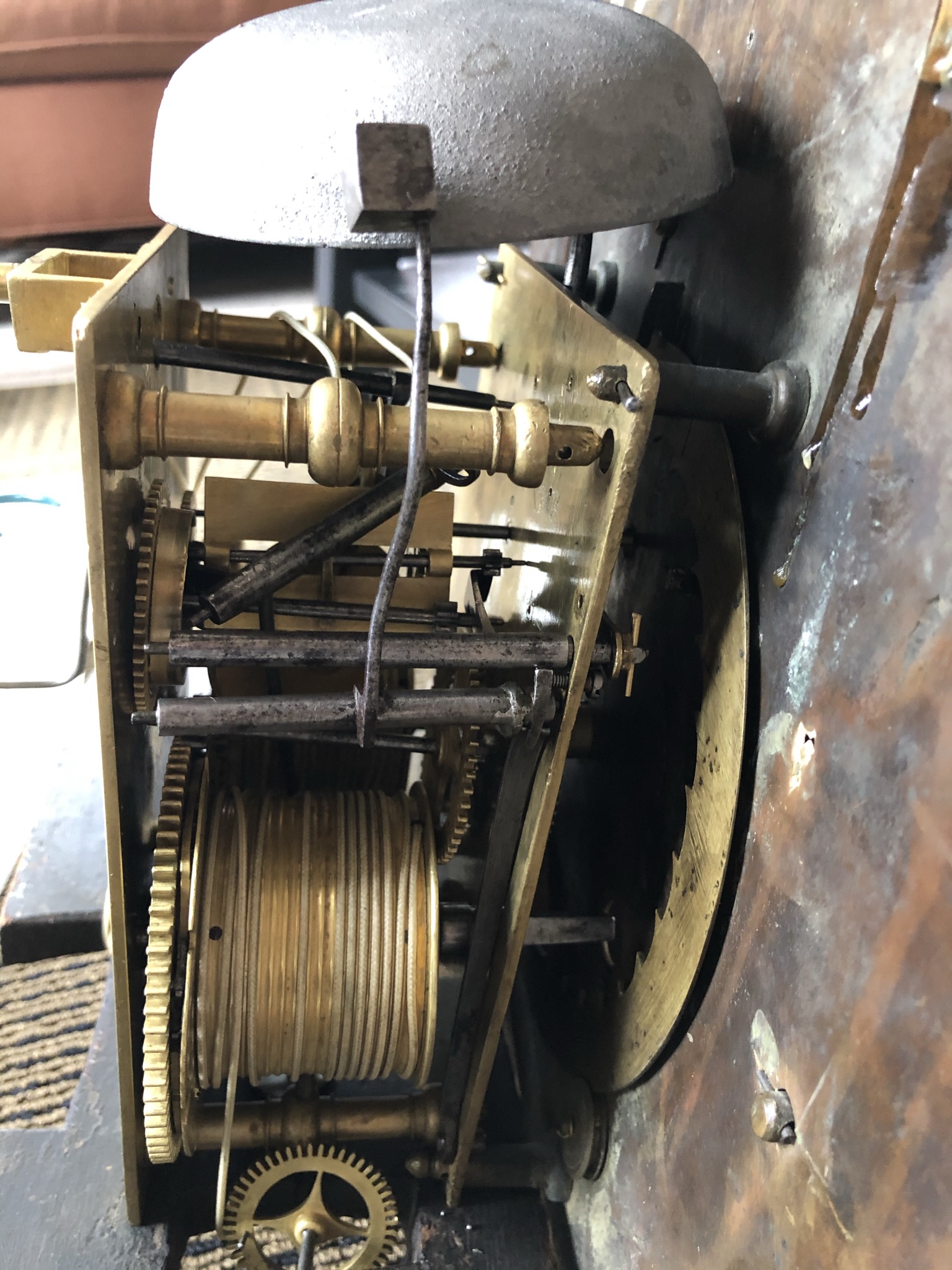
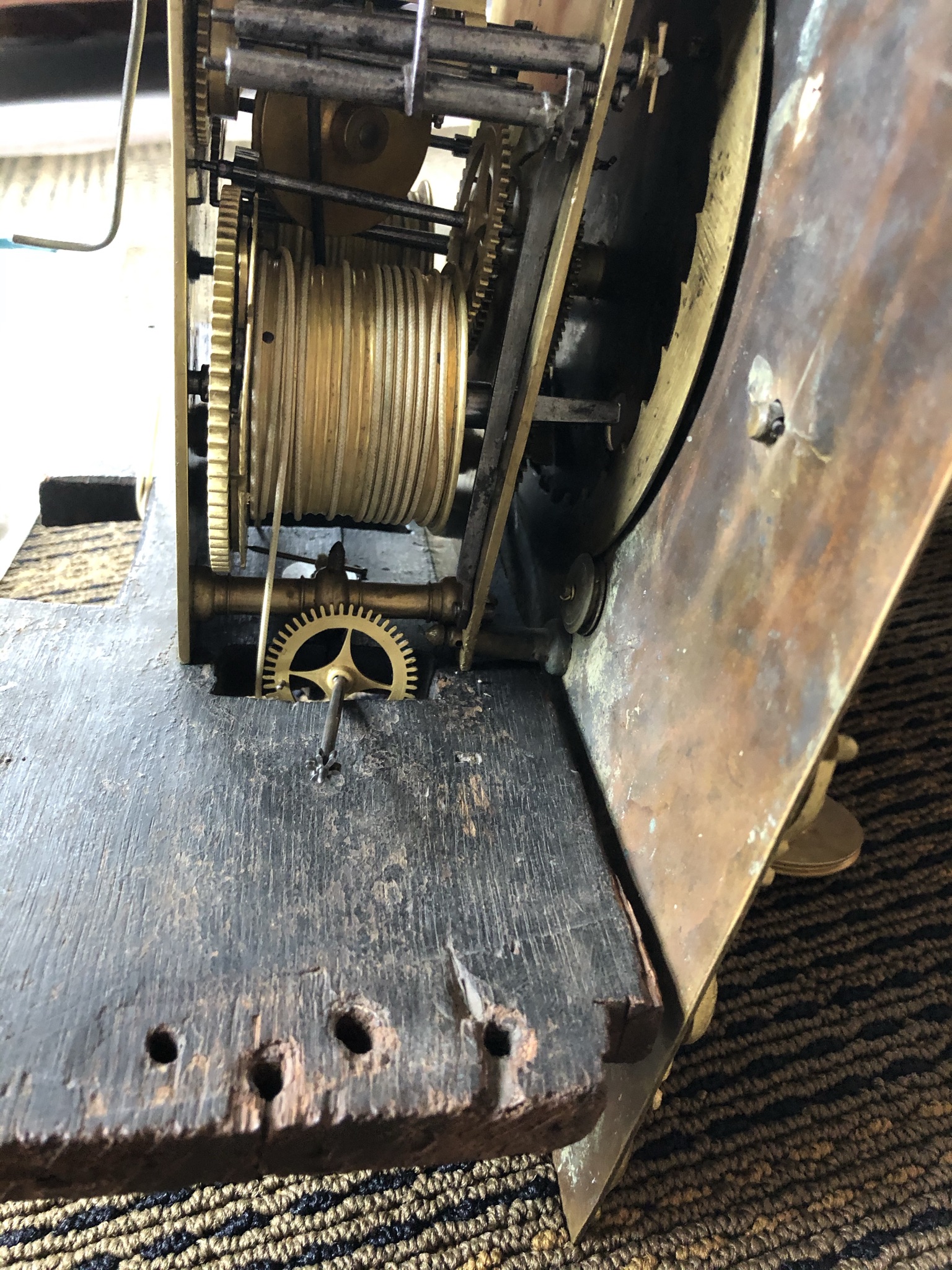
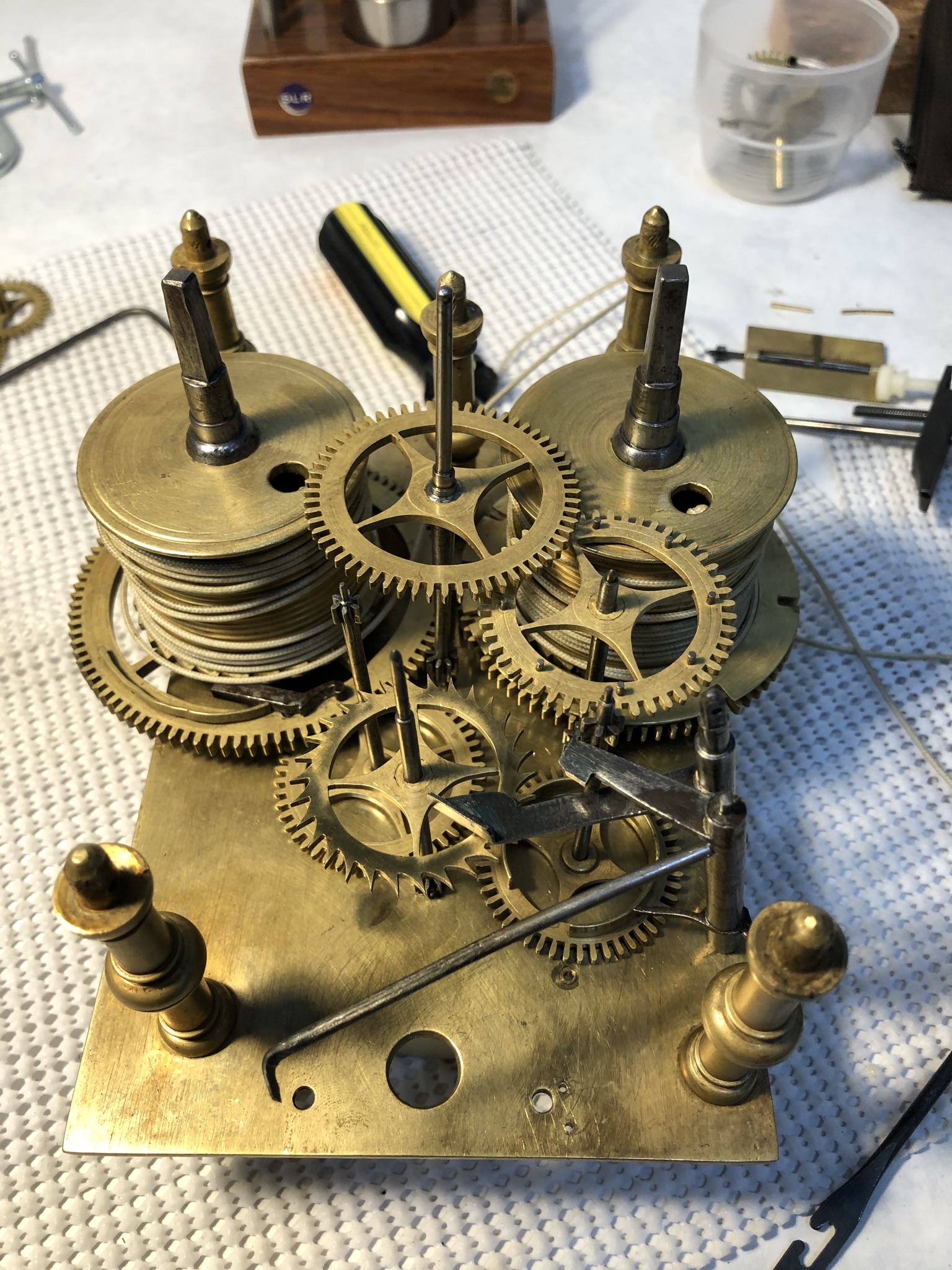
There is something particularly satisfying about bringing an old mechanical clock back to life. These remarkable machines were built to last generations, yet even the finest movements eventually require repair. My latest project, working alongside Ken Reindel, involves restoring a Gustav Becker clock movement.
Gustav Becker established his clockmaking business in Freiburg, Silesia, in 1847. His company became known for producing quality mechanical clocks, including regulators, wall clocks, mantel clocks, and grandfather clocks. More than a century later, many of these movements remain in service, a testament to their original craftsmanship.
The Challenge: Replacing a Ratchet Wheel
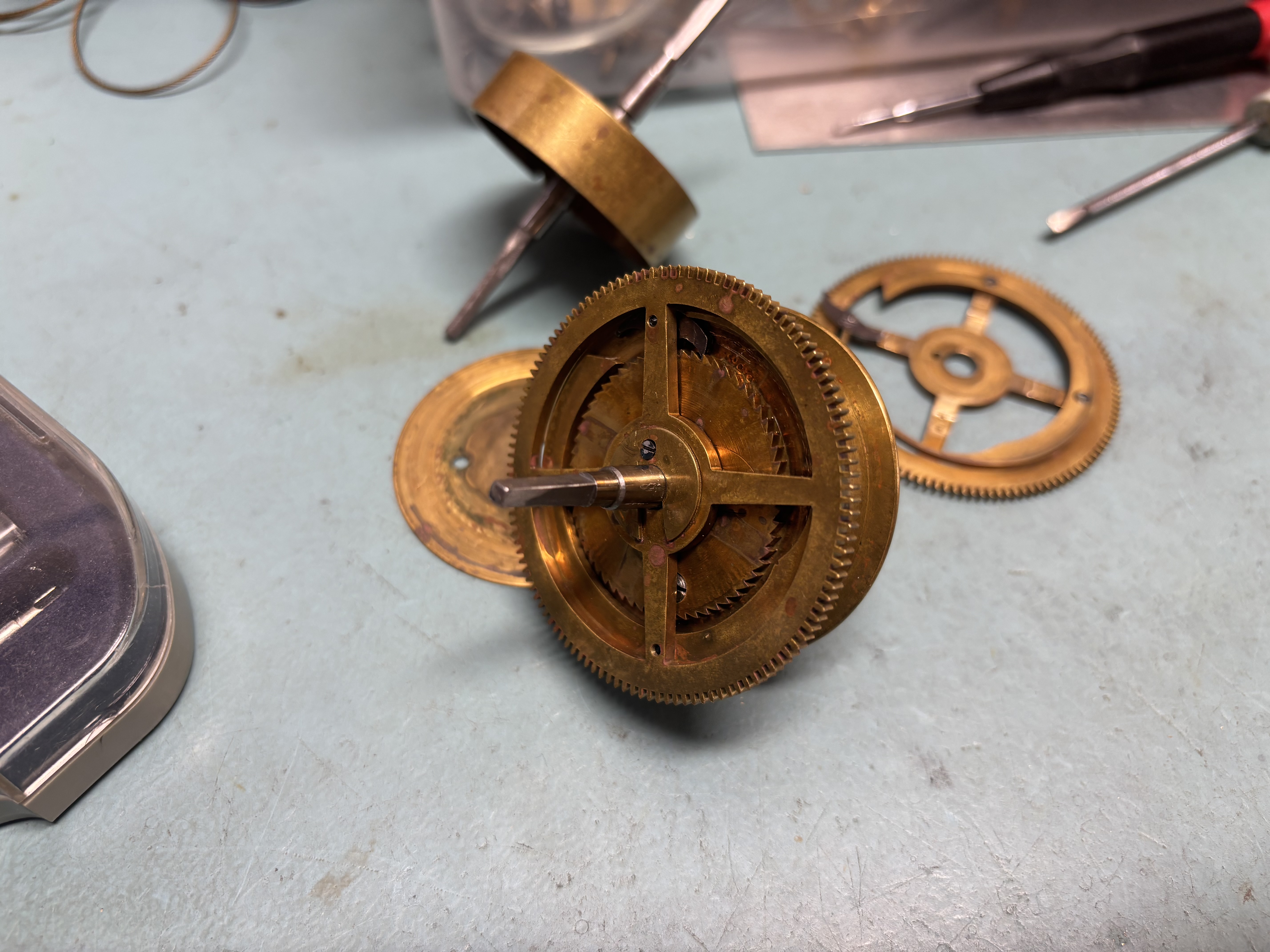
The movement we are repairing has three winding mechanisms, each equipped with a ratchet wheel. These wheels work with spring-loaded pawls to allow the clock to be wound while preventing the stored energy from being released backward.
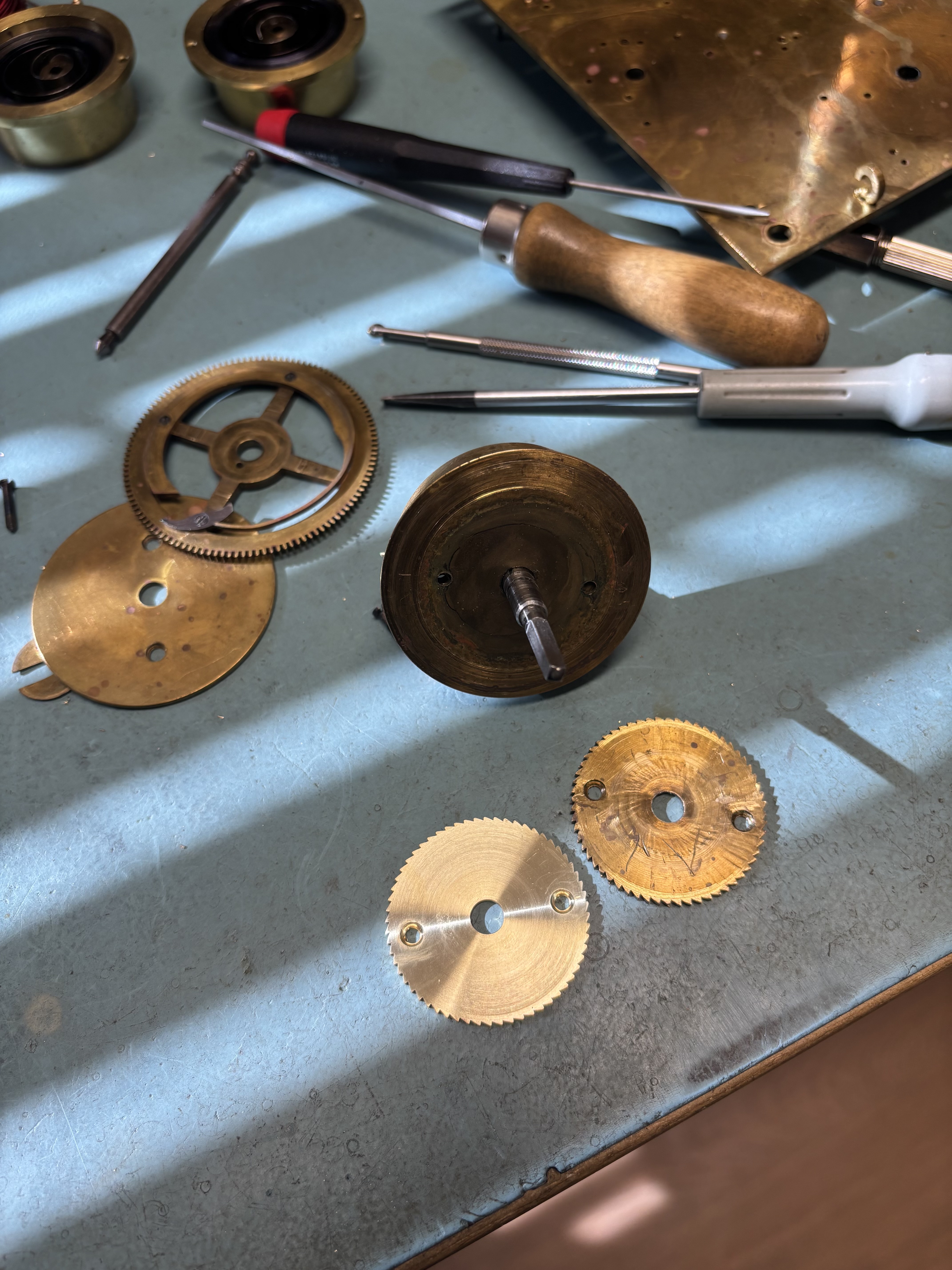
One of the three ratchet wheels needed replacement. Rather than search for an original part that might not fit, Ken decided to manufacture a new one.
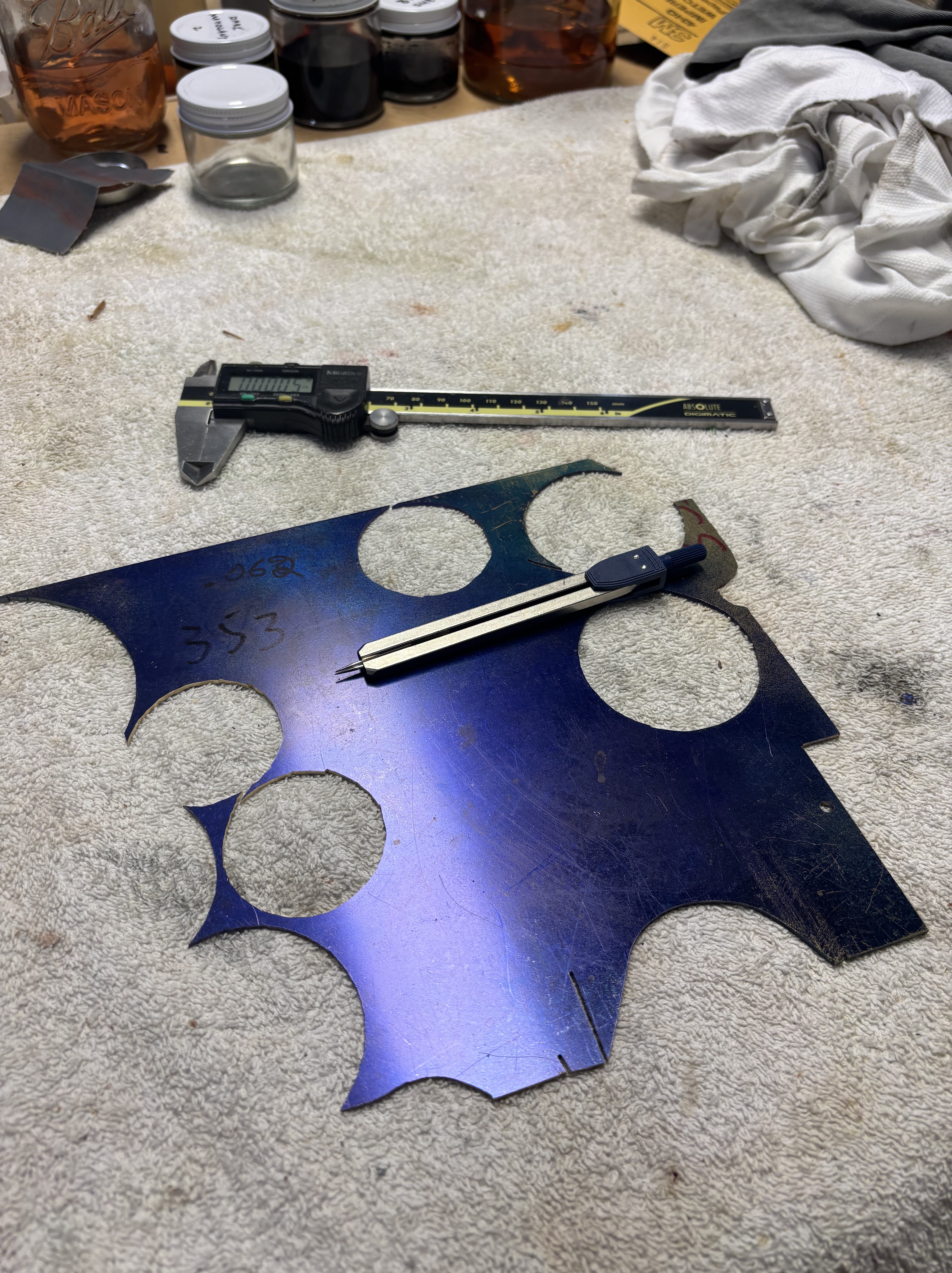
The original wheel provided our specifications: diameter, thickness, center opening, mounting holes, and tooth configuration. Using brass stock, we prepared a circular blank for machining.
Precision Milling
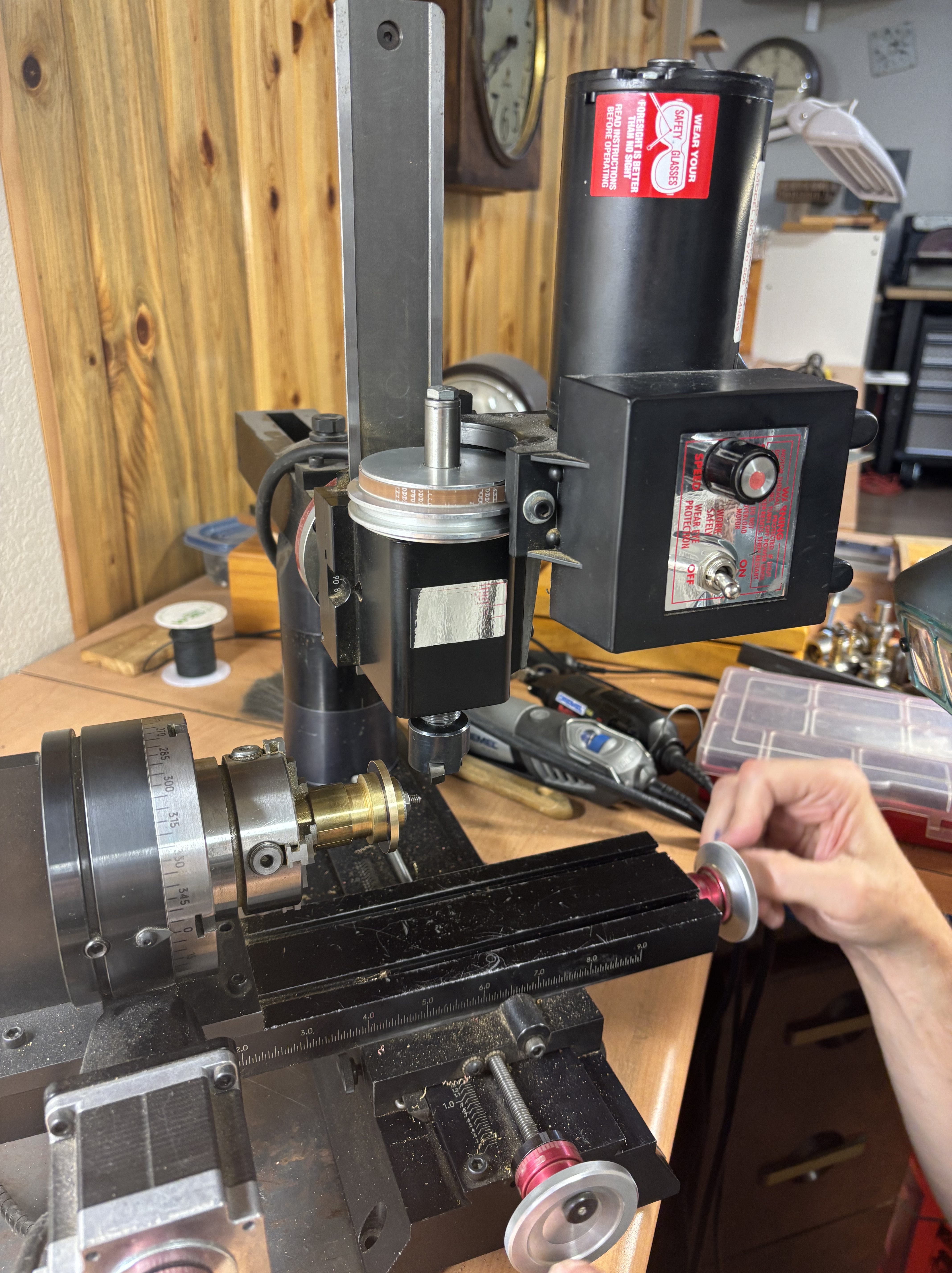
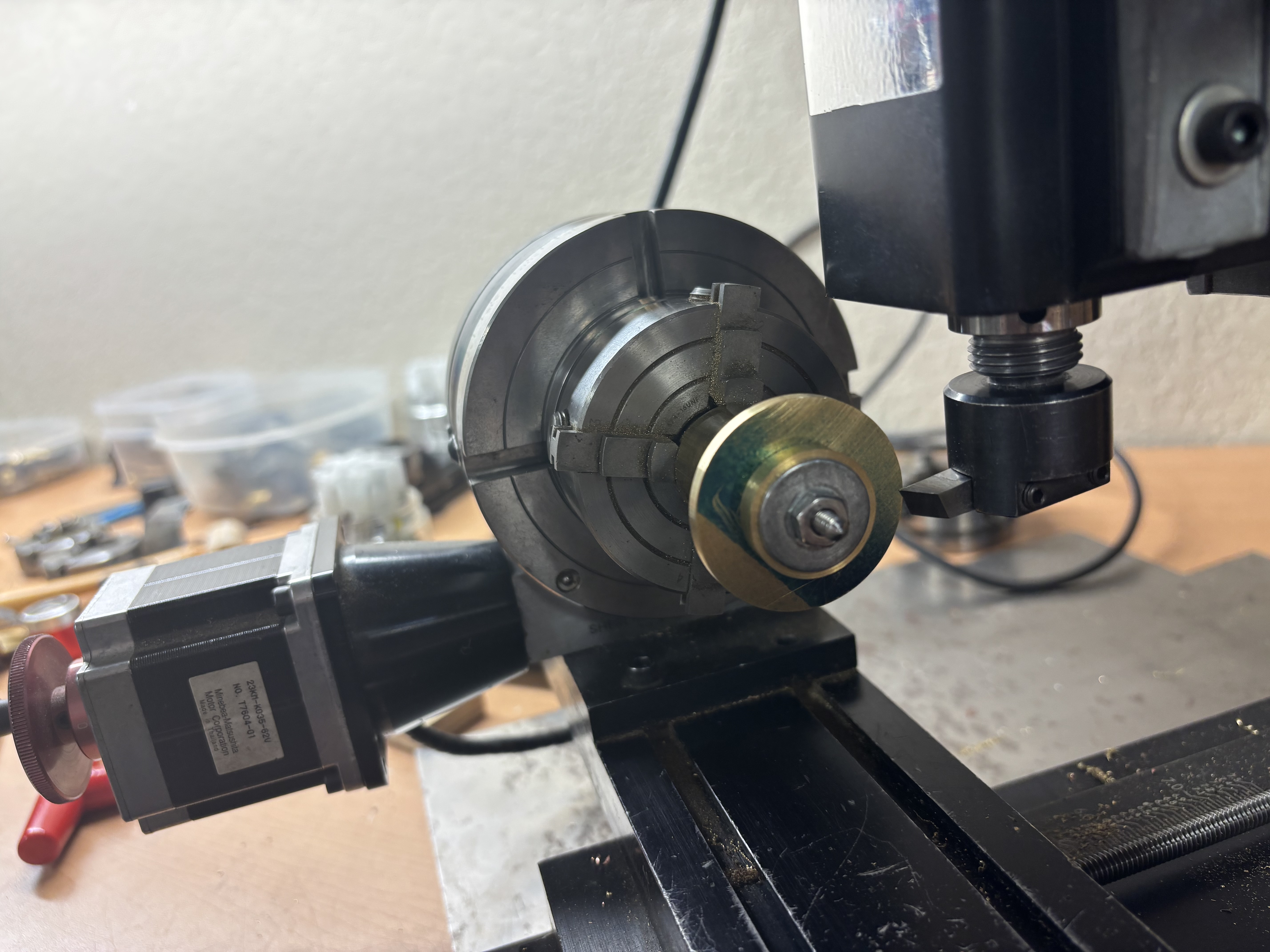
The accompanying photographs illustrate the process of producing the replacement wheel.
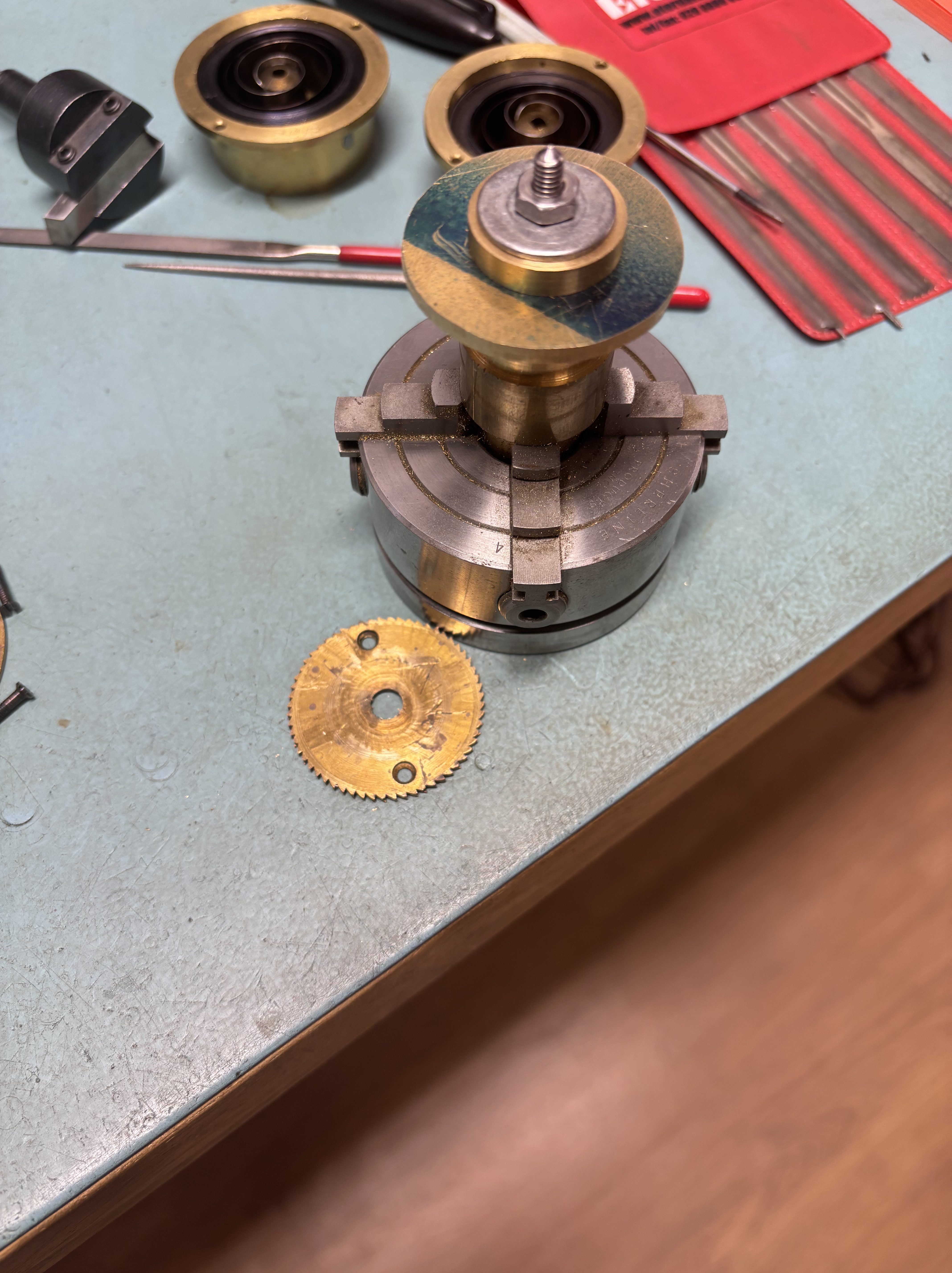
A brass blank in a precision milling setup equipped with a dividing head, allowing the workpiece to be rotated in carefully controlled increments. Each tooth had to be cut at the proper spacing and angle to engage the pawl correctly.
This is where traditional clock repair and modern machining come together. Cutting a ratchet wheel involves more than simply producing evenly spaced teeth. Their shape and orientation must permit winding in one direction while securely preventing reverse movement.
Careful measurement, setup, and machining are essential. A small error repeated around the circumference can compromise the entire wheel.
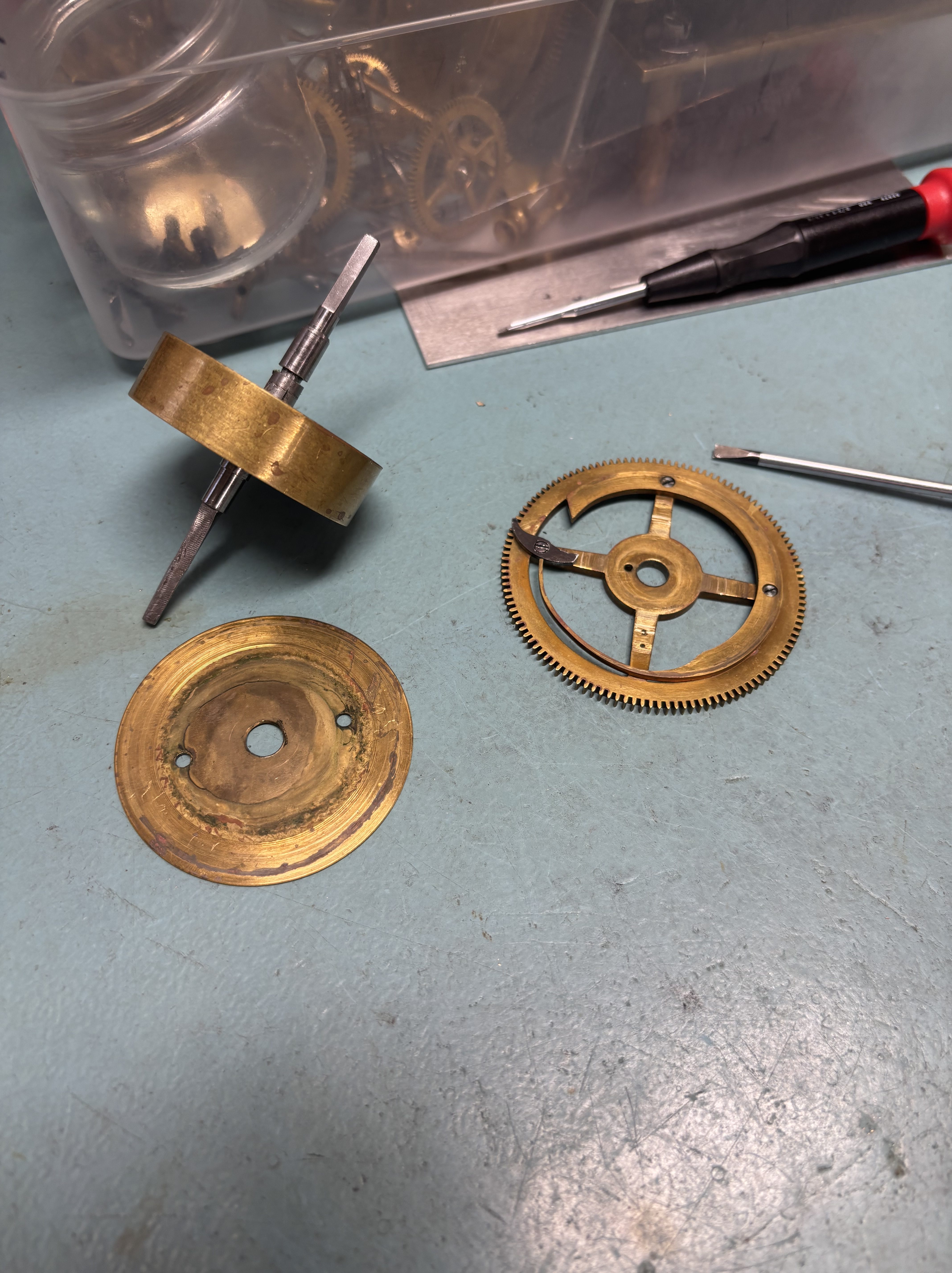
The photographs show the progression from the original worn component to the newly machined brass replacement. Side by side, the two wheels tell an interesting story: one bears the marks of many years of service, while the other reflects the precision of contemporary machining applied to a century-old mechanical design.
The Restoration Continues
The new ratchet wheel has been machined but has not yet been installed. Additional repairs and adjustments remain before the movement can be reassembled and tested.
Once fitted, we will check the engagement of the ratchet and pawl, the operation of the winding mechanism, and ultimately the performance of the clock itself.
Working with Ken on these projects is an enjoyable exchange of ideas, techniques, and practical experience. Each movement presents its own challenges, and finding the right solution is part of what makes clock repair so rewarding.
For me, the satisfaction lies not simply in replacing a worn component, but in preserving the ingenuity and craftsmanship of earlier generations. A small brass wheel may seem insignificant, yet its proper operation is essential to keeping this historic clock running.
Another step toward bringing a Gustav Becker clock back to life.
To be continued as the restoration progresses.